heidi, Author at Manpower Maine - Page 5 of 12

Author: heidi

Potential over pedigree
Latest News

Potential Over Pedigree: The Future of Hiring

Potential Over Pedigree: The Future of Hiring

by: Heidi Sawyer, Manager, Market Engagement - Manpower Maine

The greatest hiring challenge today isn’t a talent shortage — it’s tunnel vision. Too many organizations chase pedigree when they should be cultivating potential.

In defining what “qualified” looks like, companies often become so exacting that they overlook people who could excel in the role. Exceptional talent slips through the cracks not because it lacks ability — but because it lacks the “right” label.

The truth is: pedigree doesn’t predict performance — potential does. Strict degree or experience requirements not only vastly limit your talent pool, but they also often leave you missing out on some candidates that will not only succeed – sometimes excel – in moving your business forward.

Here’s how you can hire for potential without compromising on quality.

Screen Candidates In — Not Out
Shift your mindset

Traditional hiring tends to focus on weeding people out. But the future really belongs to companies that know how to bring the right people in — people who can grow, adapt, and learn as the world (and the work) keeps shifting around us.

A “screening in” mindset is about seeing what someone can do, not just where they’ve worked or what titles that they’ve had. It puts value on transferable skills, curiosity, grit, and real potential to grow. Yes, past experience matters — but in a world that’s always changing, it’s just as important to have people who can change right along with it.

When employers get clear about the skills and behaviors that truly lead to success — and hire based on those things instead of strict, ‘sounds-good-on-paper’ checklists — they discover a vast talent pool they might have otherwise overlooked.

This approach expands the talent pool in the US 15.9x according to a Recent LinkedIn study. This  improves diversity, and fuels retention. Hiring for potential means building the next generation of leaders, not just filling roles.

Distinguish “Essential” from “Added-Value” Skills

Many job descriptions are overloaded with “nice-to-haves” that masquerade as must-haves, resulting in longer hiring cycles, smaller candidate pools, and missed opportunities.

Start with outcomes. Identify the top three to five results that define success in the role — then work backward. What skills and competencies are truly essential to achieving those outcomes?

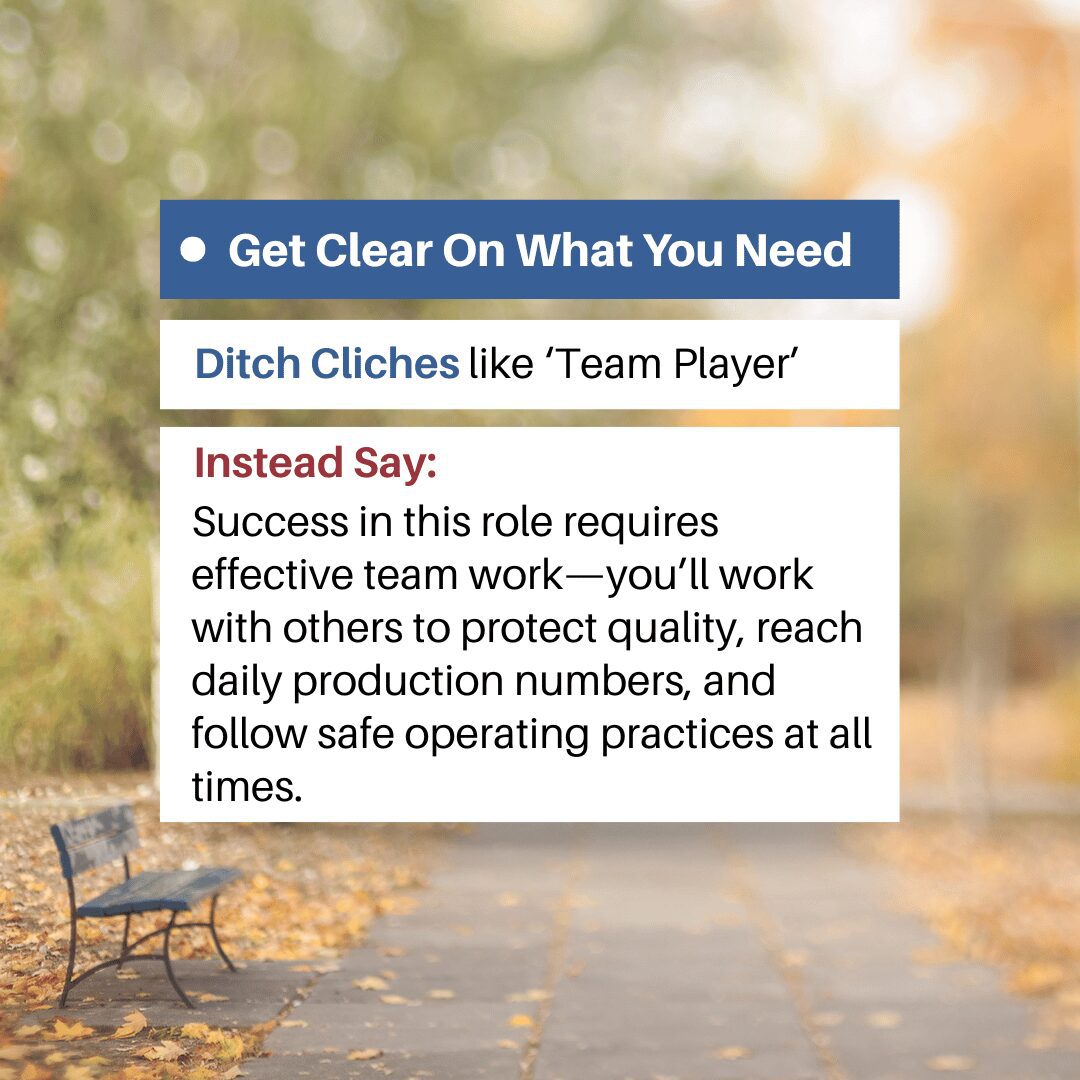
Define them in plain language — ditch clichés like “team player” or in favor of terms such as “Success in this role requires effective team work—you’ll work with others to protect quality, reach daily production numbers, and follow safe operating practices at all times.”

Go beyond the job posting. Talk with employees and leaders who understand what drives results on the front lines. Their input helps you see what truly matters in the role — and what’s just noise.
From there, take time to think about the real challenges someone in this job will face.

Then, look at the practical challenges that come with the job and what it really takes to handle them well. When you clearly distinguish what’s truly essential from what’s just “nice to have,” you create space for talented candidates who have the right abilities — even if their backgrounds don’t look traditional on paper.
Create a Structured Interview Rubric

Structure doesn’t box you in — it creates a fair playing field. What’s a rubric? Simply, it is a clear, structured scoring guide that covers what you are evaluating and how you’re evaluating it. They help maintain consistency by using a numeric anchored rating scale (1-5) which helps reduce unintended bias when evaluating candidates.

When building a rubric, begin by listing the necessary skills to succeed in this specific role that you will be evaluating:

For example, if you’re hiring a Customer Service Manager, you’re likely looking for things like:

  • Leadership: Scheduling, coaching, supporting the team, and performance management
  • Technology: Proficiency with Microsoft Office, Teams, SharePoint, and other CRM tools
  • Communication: The ability to motivate, handle tough conversations, and de-escalate situations with confidence
  • Problem Solving: Spotting errors, improving processes, and helping the team tackle technical challenges

Once you have identified all the skills you are looking for – what specific interview questions will you be asking? For example:

  • How do you handle scheduling conflicts between staff during peak demand? How was it resolved?
  • Can you share a time when you had to give someone tough feedback? How did you approach it, and what happened afterward? Would you change how you handled things at all?
  • Think back to a moment when a customer was really frustrated or upset. How did you handle the situation, and what helped calm things down?

Most scoring rubrics include a small comment box where interviewers can capture brief notes or standout quotes from a candidate’s response.

Don’t Guess — Assess

Anyone can claim they can do anything — but there is substantial power in evidence.

Validated assessments give you real, reliable data so you can make decisions you feel confident about — without relying on gut instinct or being swayed by someone’s résumé style or background. When you put candidates through the same assessments, you have an opportunity to compare ‘apples to apples’ – and this is a strong piece of data when making a hiring decision.

One thing to always keep in mind is that it is only one piece of data in the whole picture so the results should inform but not dictate your decision. Test anxiety is a widely accepted psychological phenomenon which can skew the results of employment-based skills assessments especially when the outcome can be substantial.

Hold Panel or Peer Interviews — Strategically

Panel Interviews

When done effectively, Multiple perspectives improve hiring decisions. In order for it to be done effectively, you need to ensure that everyone involved in interviewing is trained on the same criteria and knows how to apply it consistently.

When you include peers in the interview process you can gain insight from candidates that may not get shared with those that candidates view in positions of power. There is also something to be said about showing a candidate how you value staffs opinion on hiring matters, and it also helps peers become more invested in the success of the candidates that they select in the hiring process.

Pro Tip: To avoid unnecessary delays – and to keep candidates from disengaging – schedule all interviews for the same day if possible. Have back-up interviewers or virtual options available to prevent scheduling bottlenecks.

Leverage the Working Interview

No process — resumes, interviews, or assessments — reveals fit like real work.

Working interviews or temp-to-hire arrangements give both sides a chance to “test the waters” in a real work setting. Employers get to see how someone actually performs, how they mesh with the team, and how they handle day-to-day challenges. At the same time, candidates get a feel for the culture, the expectations, and what it’s really like to work there.

30–90 day working interviews are a winning strategy for top employers across Maine and the country. The key is decisive action: when you find a strong performer, make an offer quickly. Great talent doesn’t wait — and neither should you.

Discover how a Working Interview can transform your hiring process.

Manpower has been an industry leader in this proven approach for decades, helping businesses reduce risk, improve fit, and hire with confidence. Request your free staffing consultation to learn how you can leverage the power of working interviews to build a stronger, more dependable workforce.

The Takeaway

Choosing potential over pedigree doesn’t just help you find great employees — it helps you build a workforce that’s ready to move your company forward now and in the future. Companies that embrace this approach win on two fronts: they fill roles more quickly and they create workplaces where people stick around, keep learning, and grow their careers.

That’s more than good hiring practice — it’s how modern organizations stay strong and adaptable in a constantly changing world of work.

📚 References

American Psychological Association. (2022). Test anxiety: How it affects performance. APA Dictionary of Psychology & Research Summaries.

Campion, M. A., Campion, E. D., & Campion, M. C. (2023). Structured interviews: Best practices for improving reliability and validity. Journal of Applied Psychology.

Levashina, J., Hartwell, C. J., & Morgeson, F. P. (2022). The structured panel interview: Enhancing fairness and predictive validity. Personnel Psychology.

LinkedIn Economic Graph. (2023). Skills-first: How to build a skills-based organization.

McKinsey & Company. (2022). Taking a skills-based approach to building the future workforce. McKinsey Organizational Performance Practice.

Putwain, D. W., & Symes, W. (2022). Test anxiety and academic performance: A meta-analytic review. Educational Psychology Review.

SHRM. (2022). Using assessments in the hiring process. Society for Human Resource Management Talent Acquisition Research.

Smith, P. C., & Kendall, L. M. (2022). Behaviorally anchored rating scales: Development and application. In Handbook of Industrial and Organizational Psychology. (Original work published 1963)

Latest News

Bridging the Generational Divide: Finding Balance with AI and New Technology

AI Divide in the Workplace

Bridging the Generational Divide: Finding Balance with AI and New Technology   

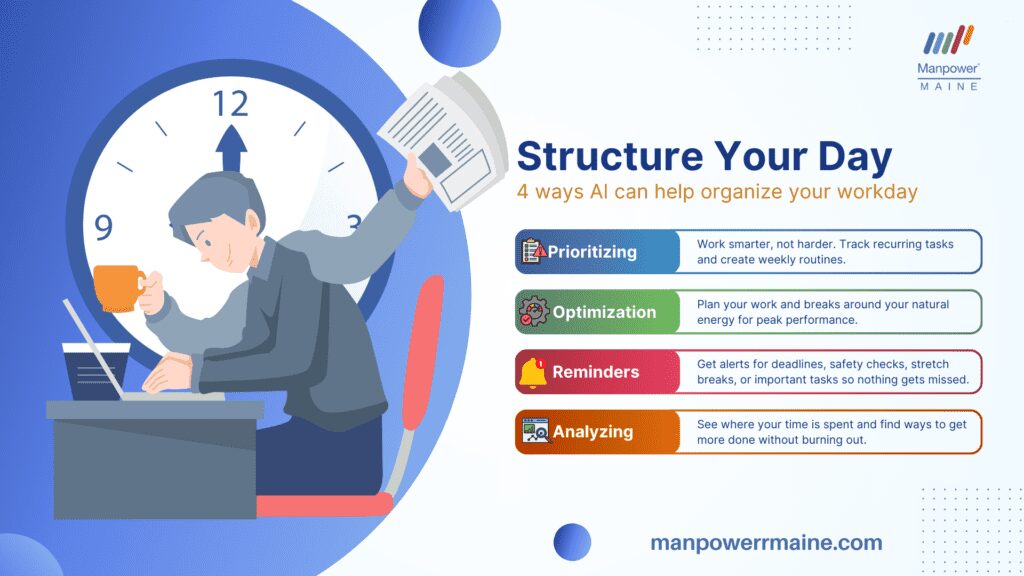
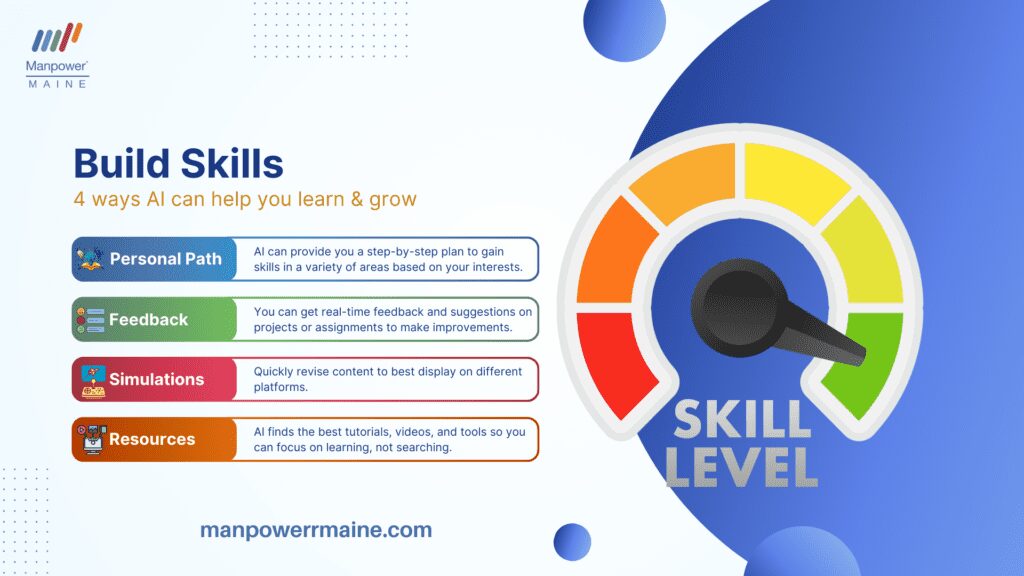
Technology sparks both excitement and skepticism — especially across generations. Some dive headfirst into AI and the latest tools, eager to automate and optimize. Others hesitate, wondering if we’re relying too much on machines and losing critical thinking along the way. This divide can lead to real friction in the workplace, especially as teams span Baby Boomers to Gen Z.

A scenario we can all relate to

A hiring committee reviewing a new batch of resumes. One team member immediately notices that several applications sound eerily similar — polished, keyword-optimized, and lacking a personal voice. “These were clearly written by AI,” someone says, raising an eyebrow. A debate follows: Is it smart to use tools to refine your resume? Or does it diminish the authenticity and effort behind the application?

Some committee members argue that leveraging AI shows resourcefulness — a skill in itself. Others worry it masks real communication ability or critical thinking. The room splits, not just by opinion, but subtly along generational lines. What one group sees as efficiency, the other sees as cutting corners. The tech itself isn’t the problem — it’s how we interpret its use.

So how do we bridge the gap? And how can we use technology like AI to enhance collaboration rather than deepen the disconnect? Below are a few strategies to help navigate this evolving digital landscape — with balance, awareness, and mutual respect.

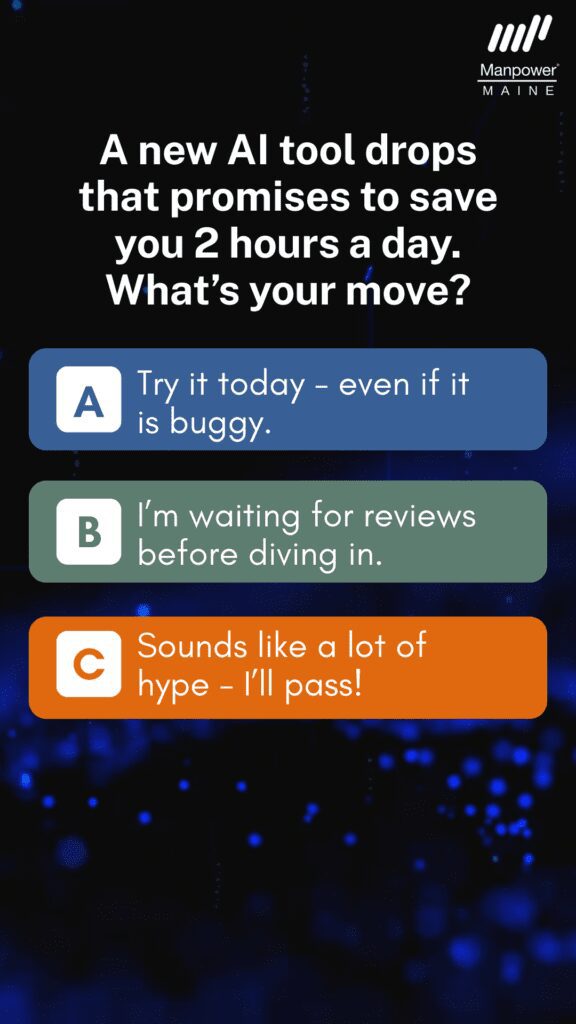
The Early Adopters vs. The Skeptics

Every workplace has them.

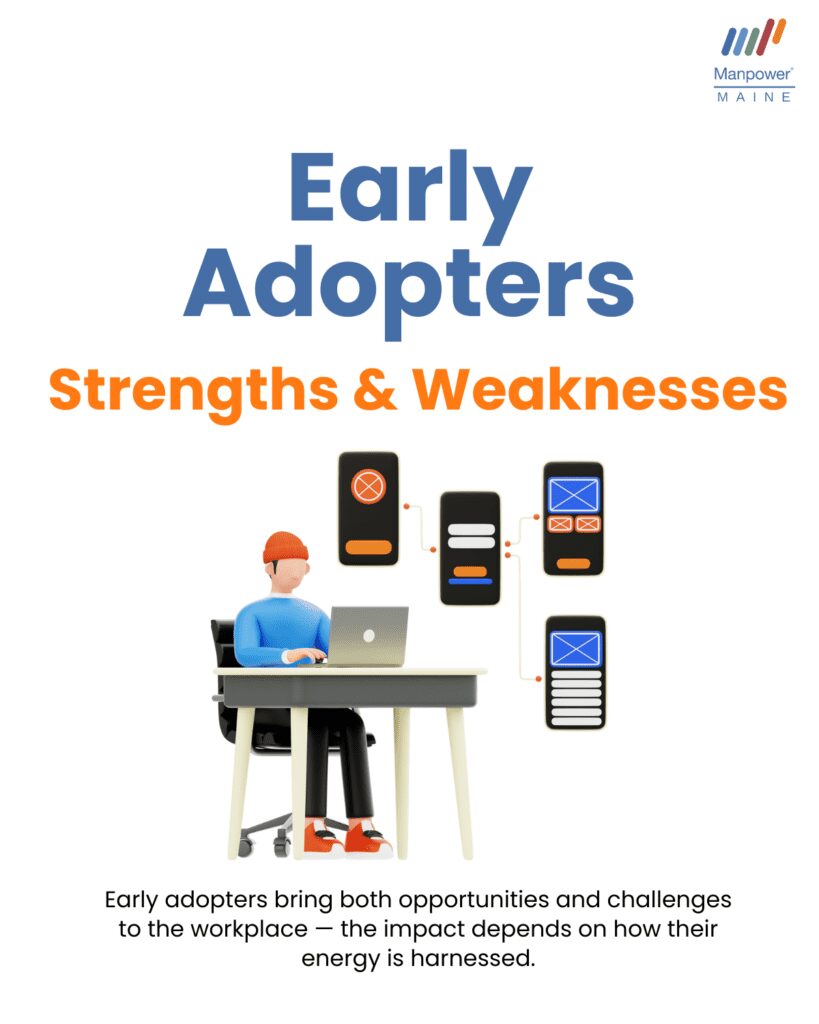
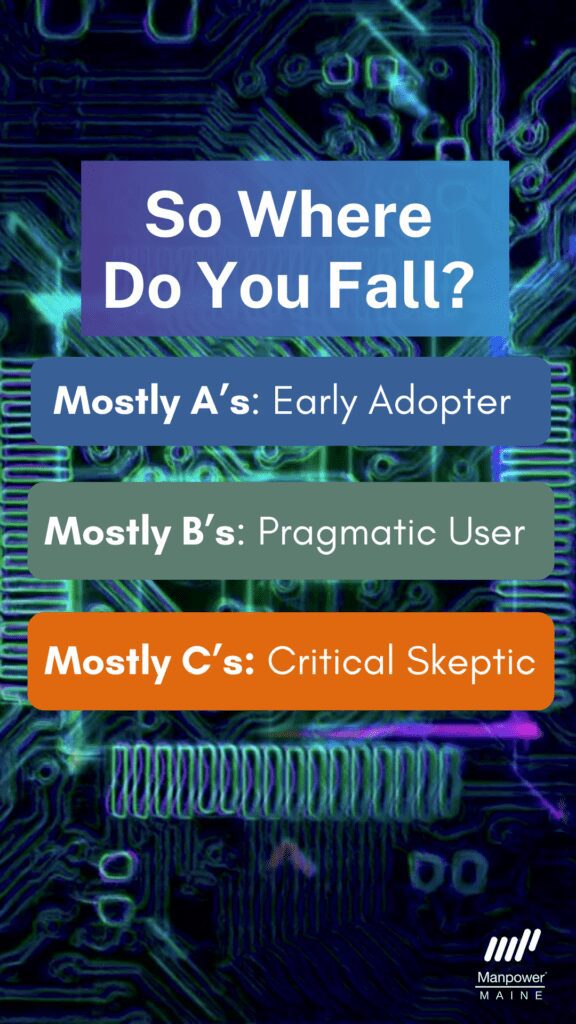
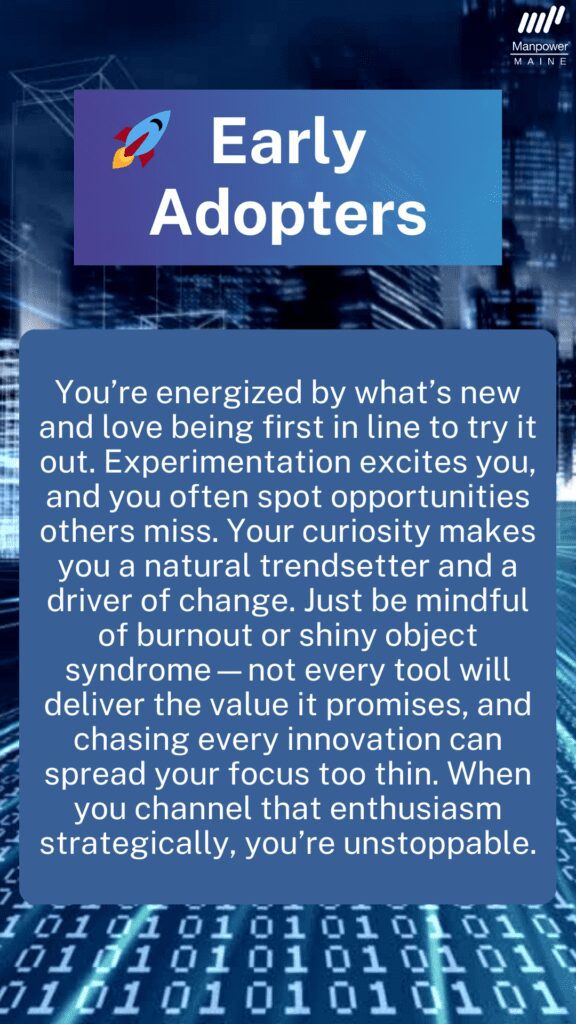
  • The early adopters, who enthusiastically jump into the latest apps, tools, and AI platforms. They automate emails, generate content with AI, and are constantly looking for ways to do more with less.

Potential Challenge: When early adopters move too quickly, there’s a risk of quality issues from poorly vetted automation and unexpected downtime that stems from overly accelerated workflows.

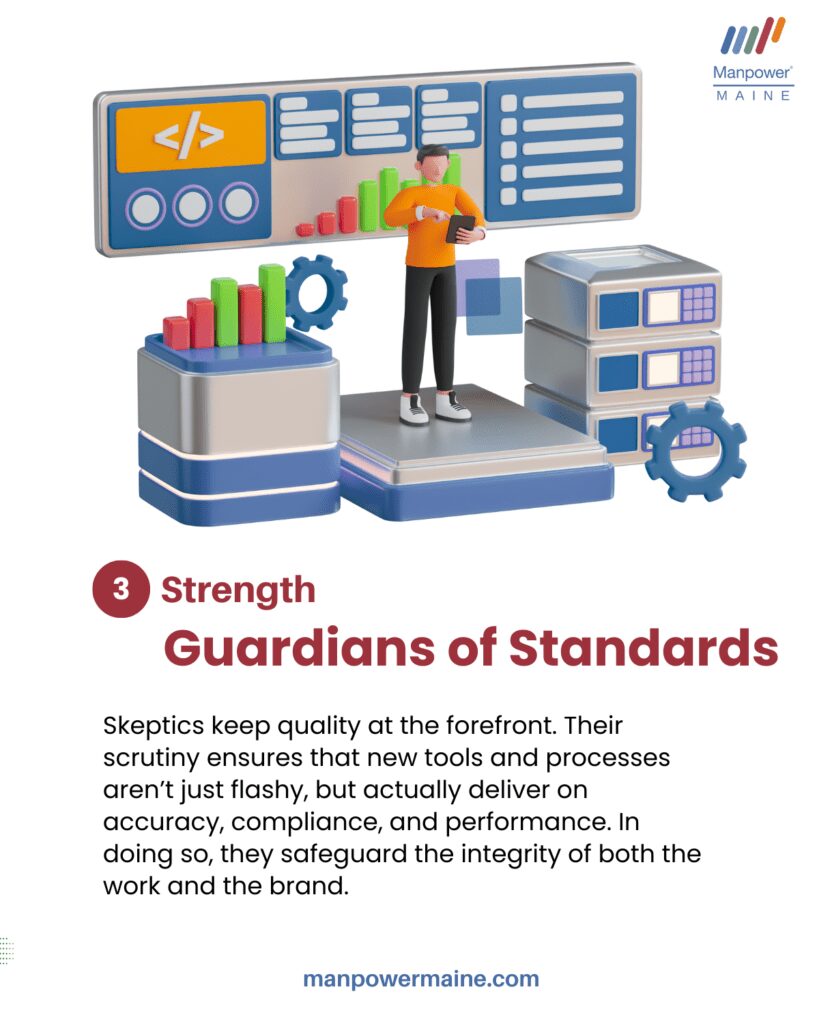
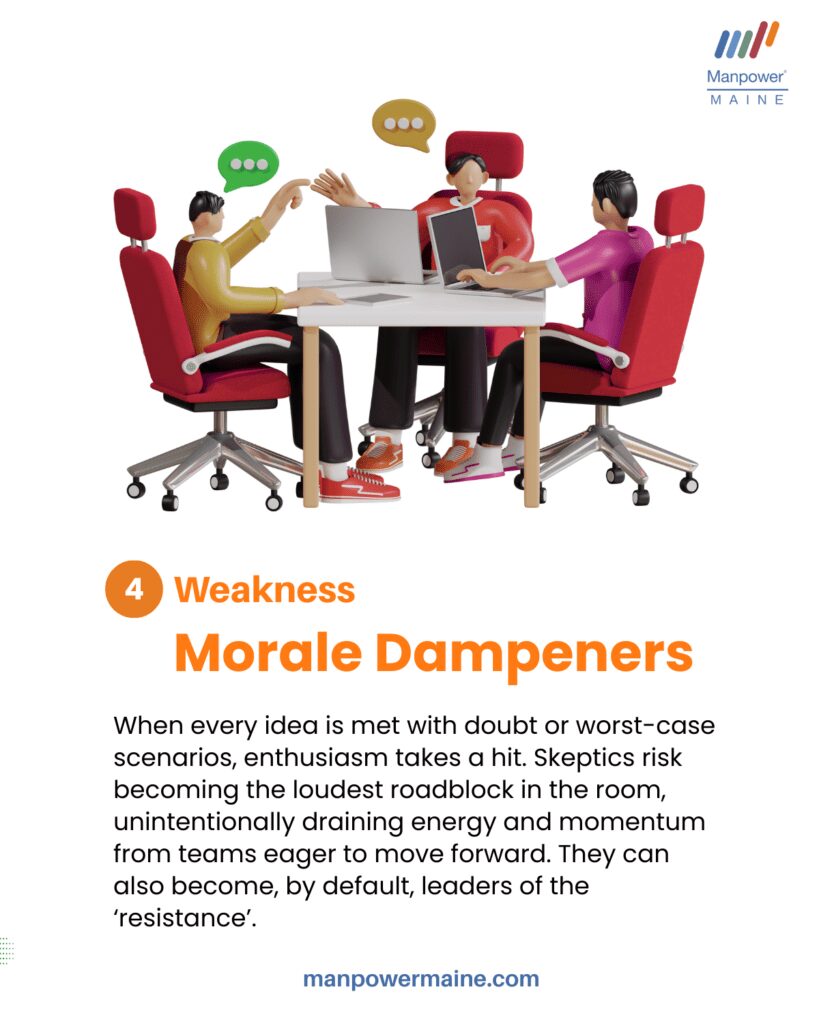
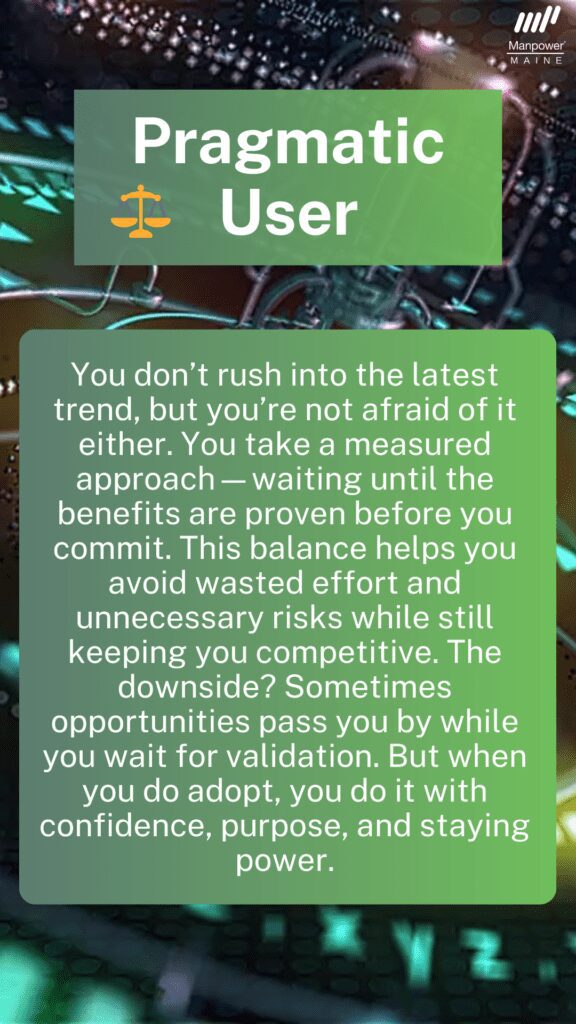
  • The skeptics, who value traditional processes, worry about over-reliance on machines, and often question whether AI tools are actually improving outcomes — or just creating shortcuts that bypass critical thinking.

Potential Challenge: Resistance to change can sometimes stem from a sense that long-standing methods are being replaced or undervalued, which can feel personal, even if that’s not the intent.

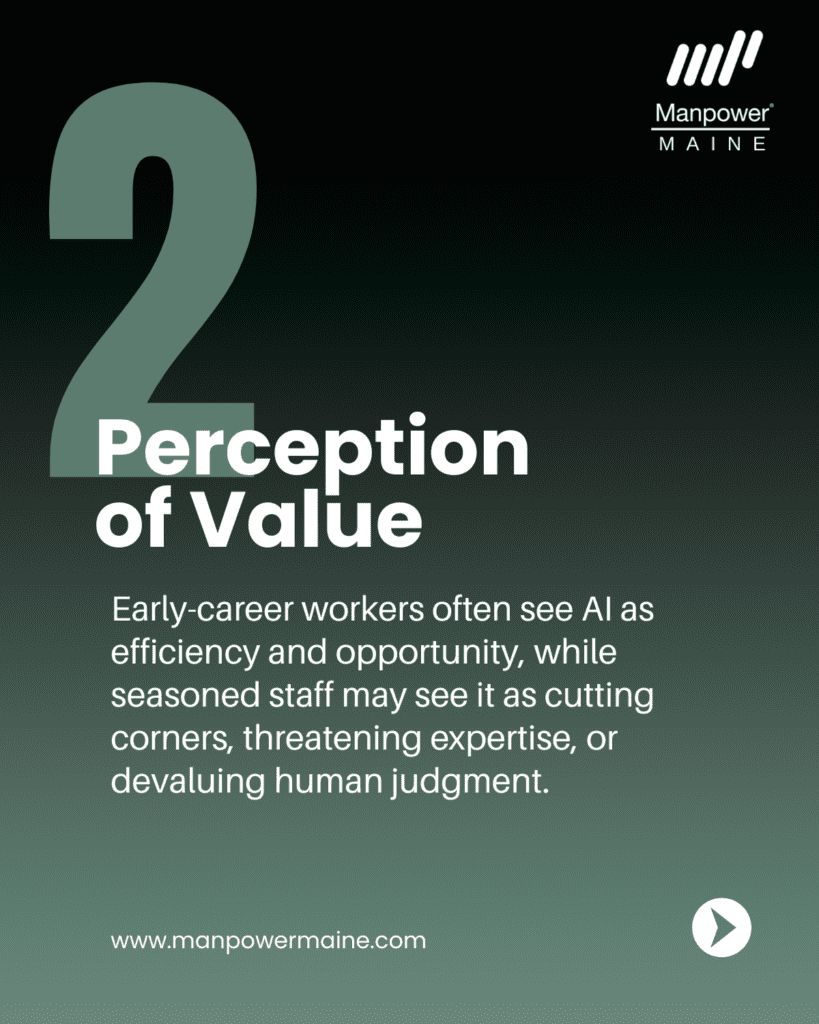
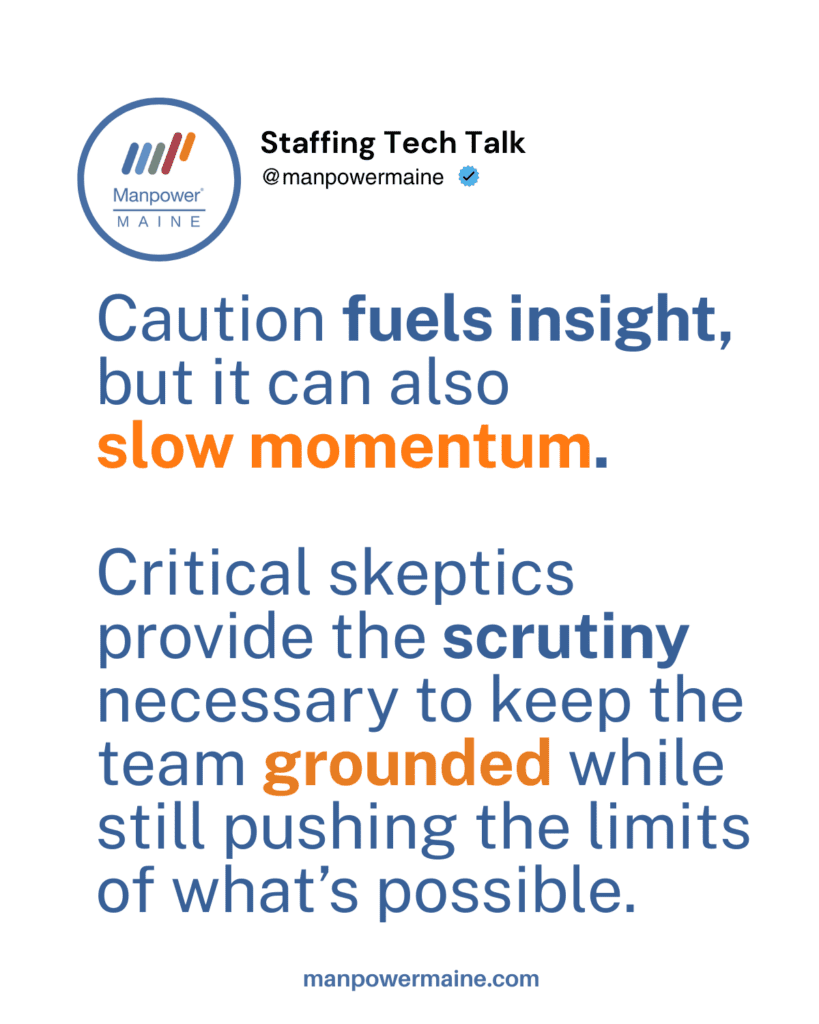
These groups often split along generational lines, but not always. While younger professionals tend to embrace digital tools quickly, there are seasoned professionals who are just as curious — and younger ones who are deeply skeptical of where all this is going.

The point is: neither side is necessarily right or wrong. But the tension between them is real.

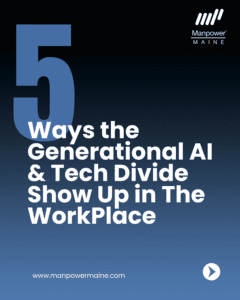
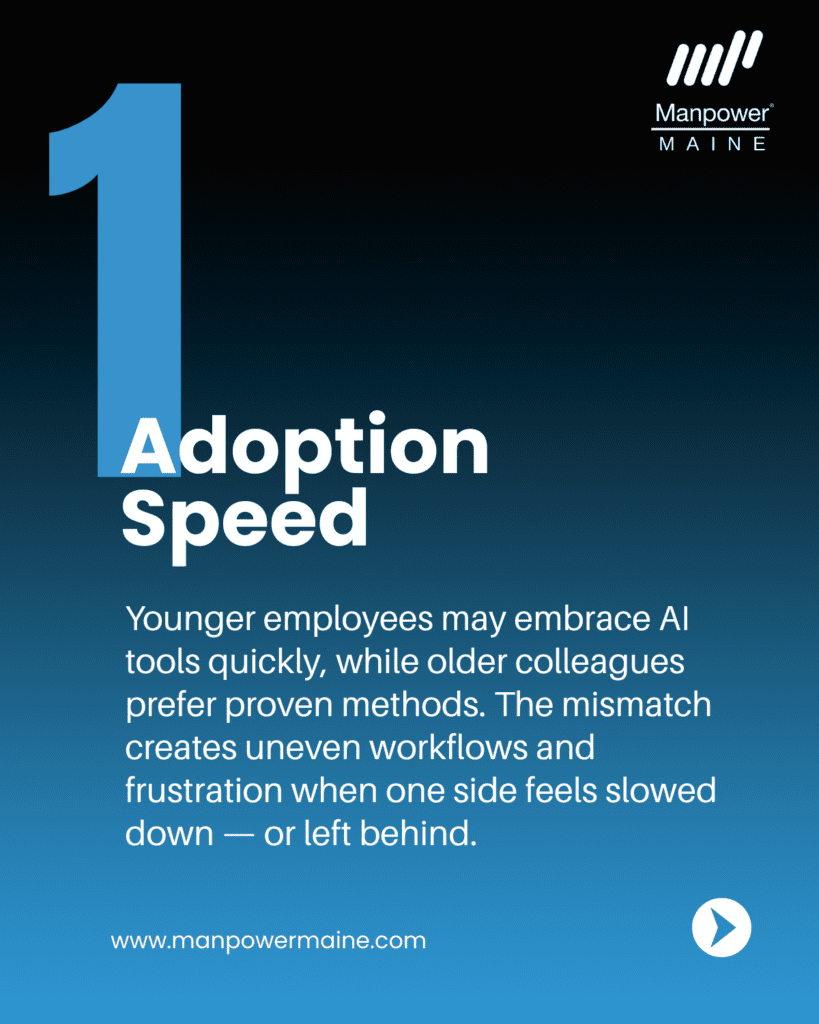
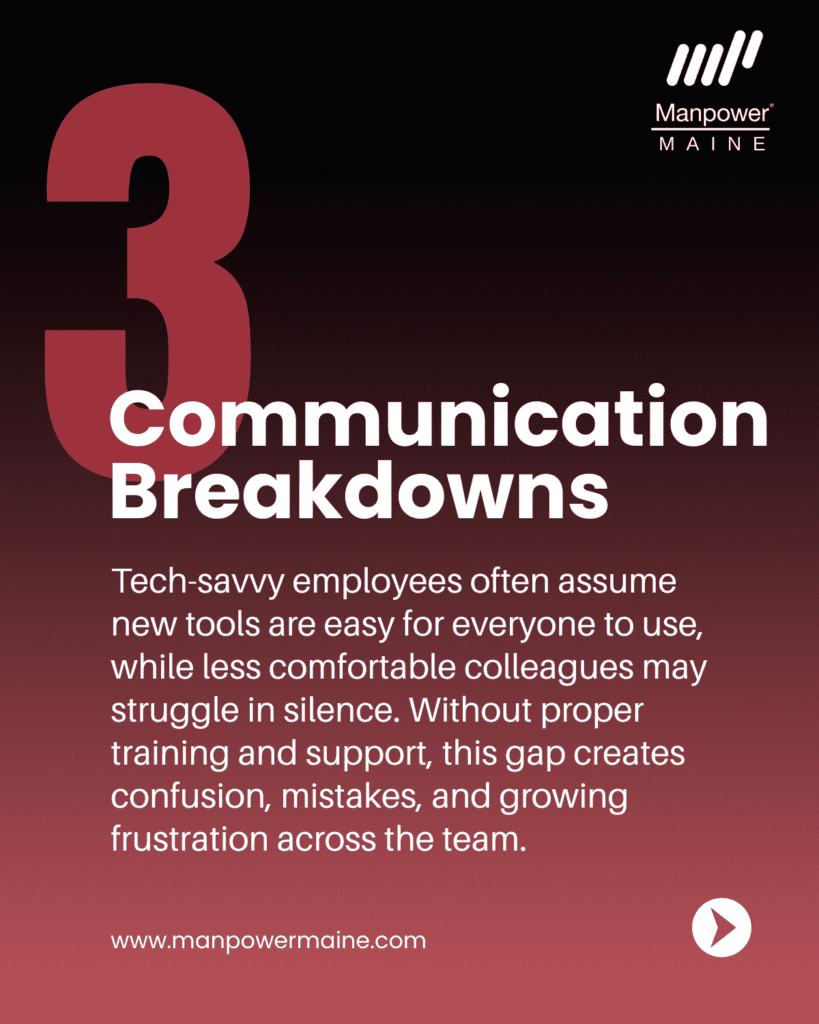
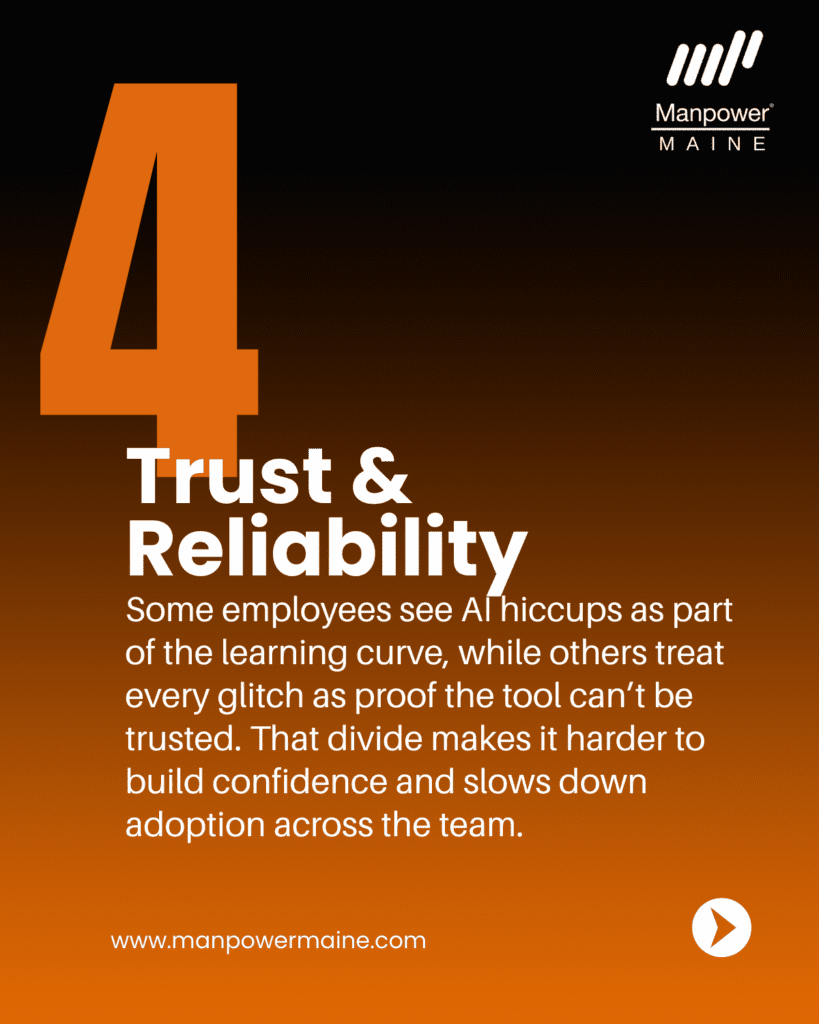
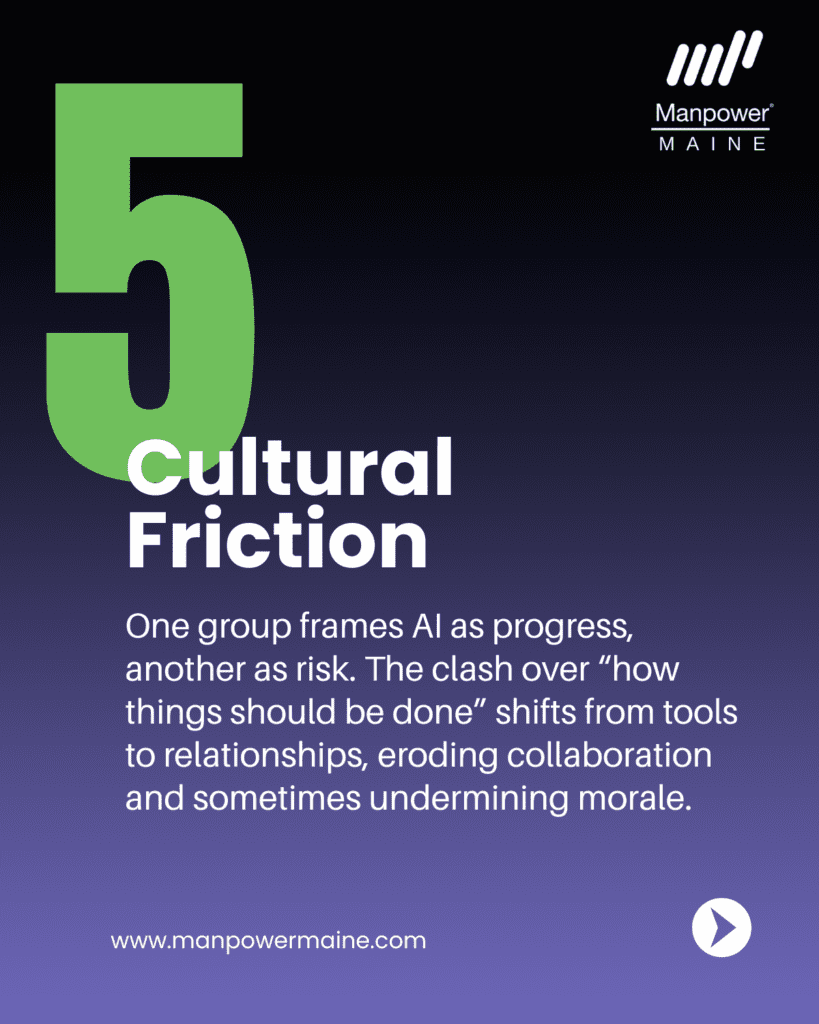
5 Ways the generational Divide Shows Up in the WorkplaceWhy the Disconnect Matters
The gap in comfort levels with tech — especially AI — can create:

  • Miscommunication: Tech-savvy employees may assume everyone’s on the same page when introducing new tools, leading to confusion or resistance.
  • Slowed adoption: Projects involving new tech can stall if a portion of the team feels left behind or unheard.
  • Overuse or misuse: On the flip side, early adopters may rely too heavily on AI tools, sacrificing quality or originality in favor of speed.
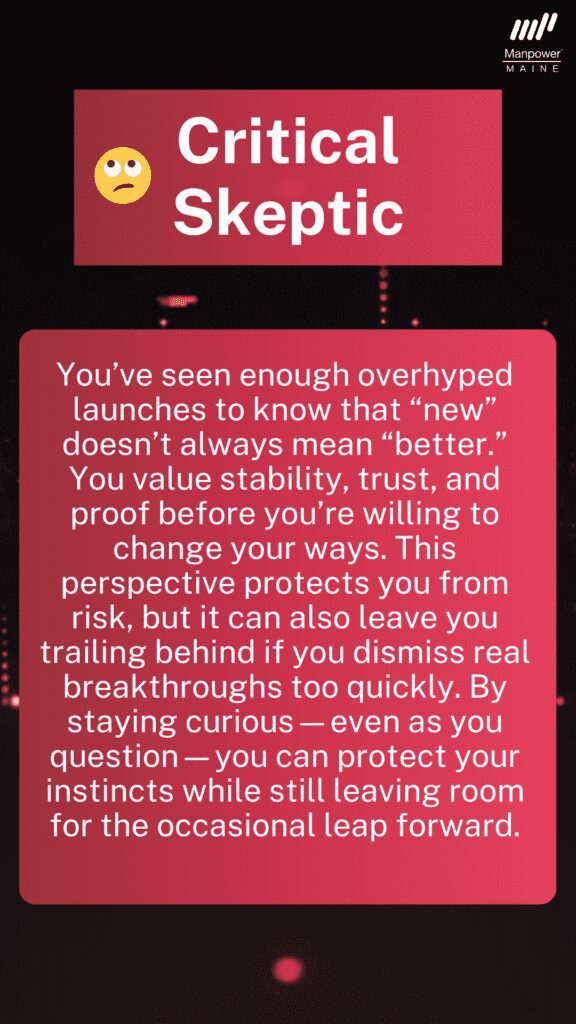
  • Cultural friction: When one generation sees AI as progress and another sees it as threat, collaboration suffers.
  • Trust issues: For those already hesitant, even a small hiccup can feel like validation that technology isn’t reliable, making future buy-in even harder to achieve.

It’s not just about who uses the latest tools. It’s about how people perceive change, and how those perceptions impact team dynamics.

Strategies to Bridge the Gap

To move forward, we don’t need to choose sides. We need to find balance — and that starts with creating space for dialogue, empathy, and shared learning.

Normalize the Learning Curve

Not everyone will master new tools on day one — and that’s okay. This is evolving technology, and we’re all learning together. Hiccups will happen, but they’re part of the process. When we take time to reflect and correct, even glitches help us and the tech improve.

Encourage Cross-Generational Mentorship

Pair AI enthusiasts with those who are more hesitant. Let the knowledge flow both ways — technical skills in one direction, and critical thinking, domain expertise, and caution in the others

Avoid the Hype Trap

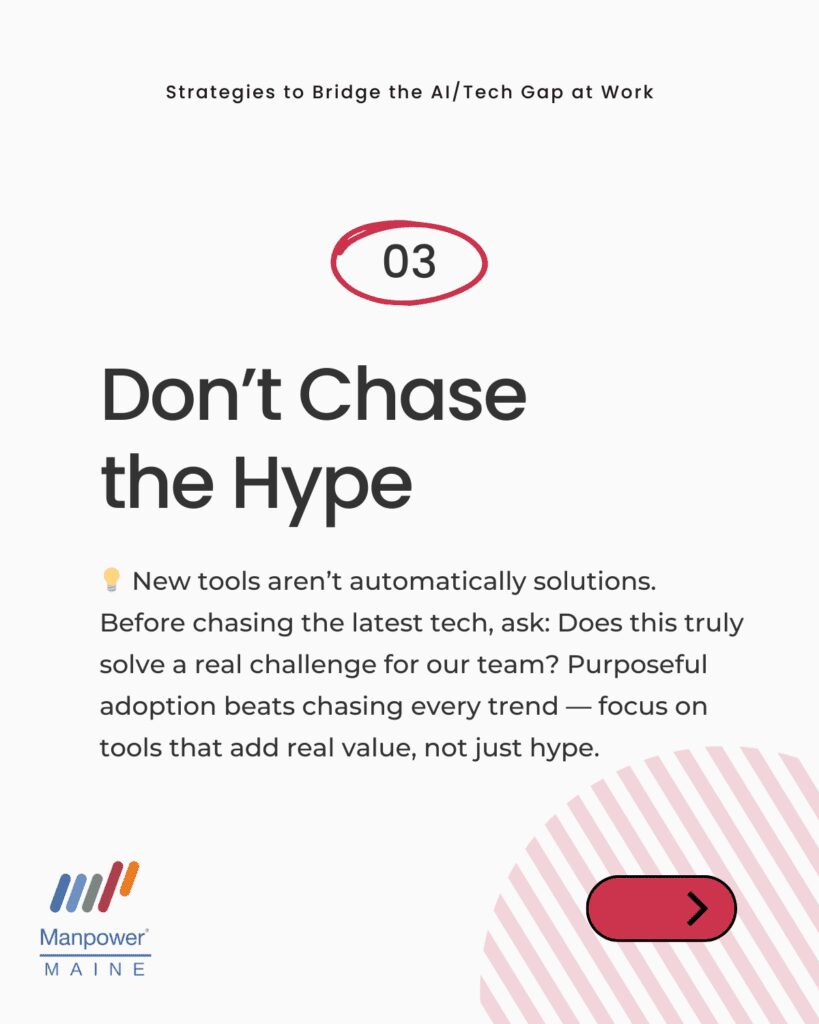
Just because a new tool exists doesn’t mean it’s right for your team. Set a culture of thoughtful adoption, where purpose comes before novelty

Reframe the Conversation

Instead of asking “Are you using XYZ yet?”, ask “How could XYZ help make this process better?” or “Where should we still rely on current processes?” This shifts the focus from pressure to curiosity

Emphasize What Technology Can’t Replace

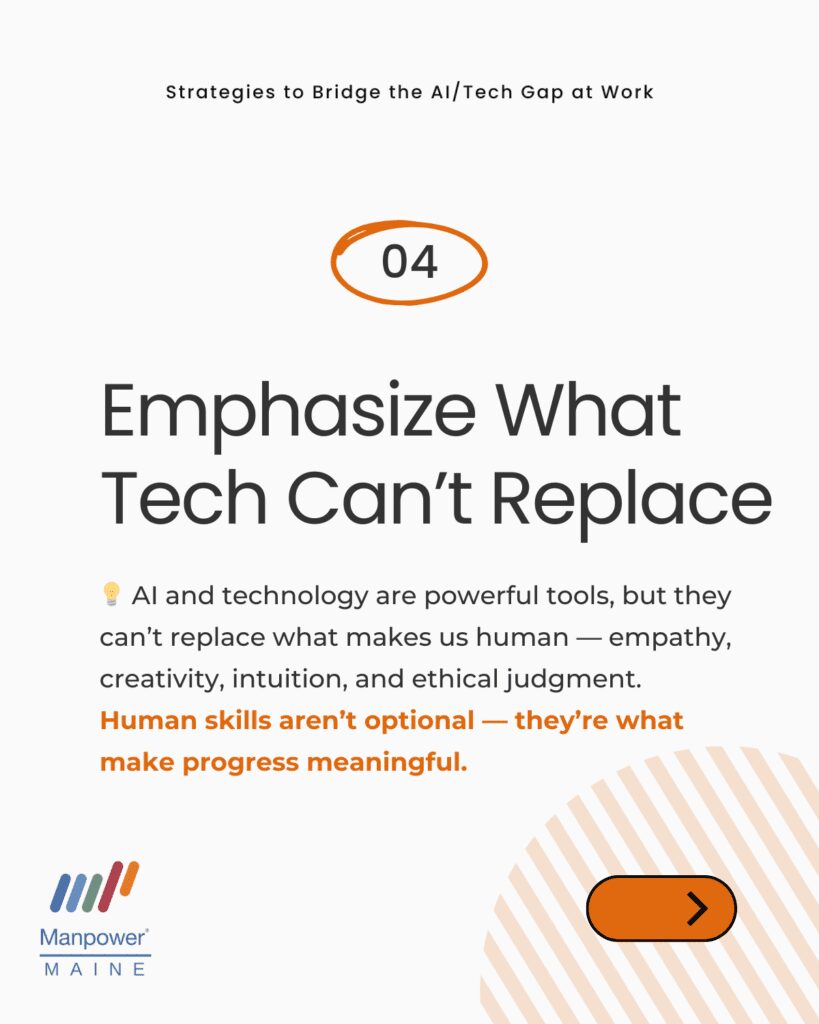
Technology is powerful, but it doesn’t replace emotional intelligence, creative intuition, or ethical judgment. Always celebrate and protect the human skills that matter most.

Final Thoughts: It’s Not a Race — It’s a Relationship

Technology isn’t slowing down — and neither is the conversation around it. The goal isn’t to convince everyone to adopt every tool, or to pump the brakes on progress. It’s to build a workplace culture that respects differing perspectives, learns together, and uses technology intentionally.

Whether you’re excited by the promise of AI and evolving technologies or cautious about the implications, one thing is clear: we need all voices at the table. Because when generations listen to — and learn from — one another, we don’t just adapt to change. We shape it.

Oh, and just in case you are wondering… This article itself is a small example of balance — drafted by a human, refined with AI, and finished with human judgment.


Additional Related Content

Latest News

Deputy Judicial Marshal Inquiry Form

Deputy Judicial Marshal Inquiry
Thank you for your intereste in Deputy Judicial Marshal positions, please fill out this quick form to help us know a little bit more about you and your experience and a Recruiter will be in touch about next steps.
Drag & Drop Files, Choose Files to Upload
Please upload a copy of your resume. If you do not have one handy we can get that from you at a later date.
Latest News

Maine Career Exploration Business Inquiry

Featured Jobs

Administrative Assistant in Guilford – Paid Youth Intern

Administrative Assistant in Guilford – Paid Youth Internship

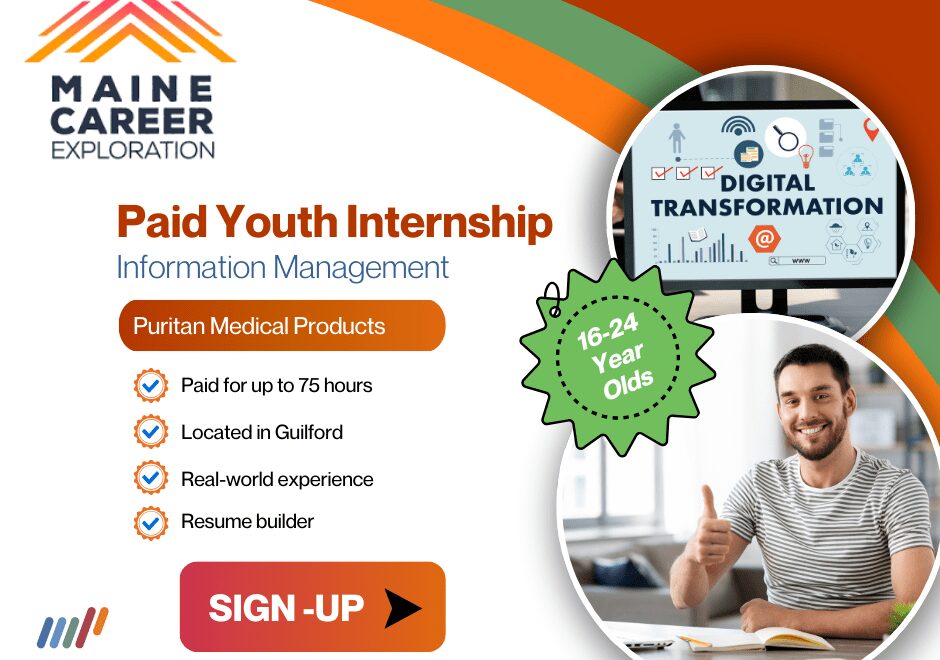
Are you age 16-24 and interested in exploring a career in Business & Office Administration or exploring Information & Records Management? We have an exciting opportunity available with Puritan Medical Products in Guilford, Maine through the Maine Career Exploration Program.

This innovative program is part of the Maine Jobs and Recovery Plan. It offers age-appropriate paid work opportunities to youth ages 16-24 to support career exploration that lines up with areas of interest.
What Paid Interns Receive:

    • Up to 75 hours of paid work experience at $14.65 per hour (Nearly $1100 pre-tax)
    • Opportunity to get real-world experience in an office & manufacturing environment
    • Chance to make community connections with a leading area employer
    • An inside look at administrative workflows, record keeping, and internal systems
    • Excellent resume builder for college applications or future work experience

What You Will Be Doing:

    • Working with the office staff to scan & upload files into the computer
    • Supporting administrative activities as instructed

Schedules Available:

    • Schedule is flexible based on student’s needs

Interested in kick-starting your career exploration and taking a world of work test drive? Simply express your interest by filling out this quick contact form and we will be in touch.


Featured Jobs

Administrative Assistant in Easton – Paid Youth Internship

Administrative Assistant in Easton – Paid Youth Internship

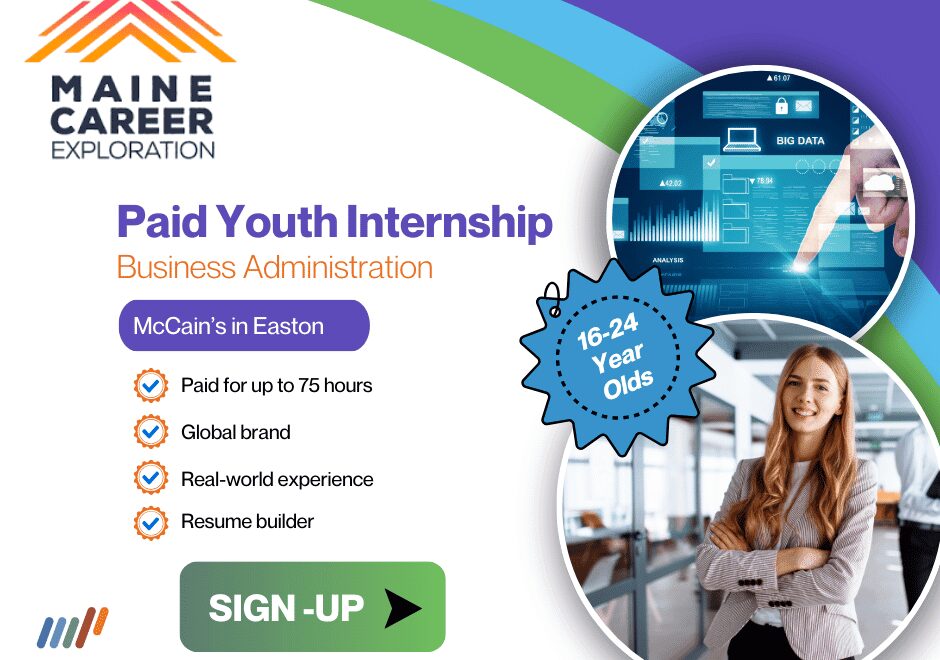
Are you age 16-24 and interested in exploring a career in Business & Office Administration or exploring Information & Records Management? We have an exciting opportunity available with McCains in Easton, Maine through the Maine Career Exploration Program.

This innovative program is part of the Maine Jobs and Recovery Plan. It offers age-appropriate paid work opportunities to youth ages 16-24 to support career exploration that lines up with areas of interest.

What Paid Interns Receive:

  • Up to 75 hours of paid work experience at $14.65 per hour (Nearly $1100 pre-tax)
  • Opportunity to get real-world experience in an office & manufacturing environment
  • Chance to make community connections with a leading area employer
  • An inside look at administrative workflows, record keeping, and internal systems
  • Excellent resume builder for college applications or future work experience

What You Will Be Doing:

  • Working with the office staff to scan & upload files into the computer
  • Supporting administrative activities as instructed

Schedules Available:

  • Schedule is flexible based on student’s needs

Interested in kick-starting your career exploration? Simply express your interest by filling out this quick contact form and we will be in touch.

Early Childhood Education Paid Internship
Latest News

Daycare Classroom Aide – Paid Youth Intern

Daycare Classroom Aide – Paid Youth Internship

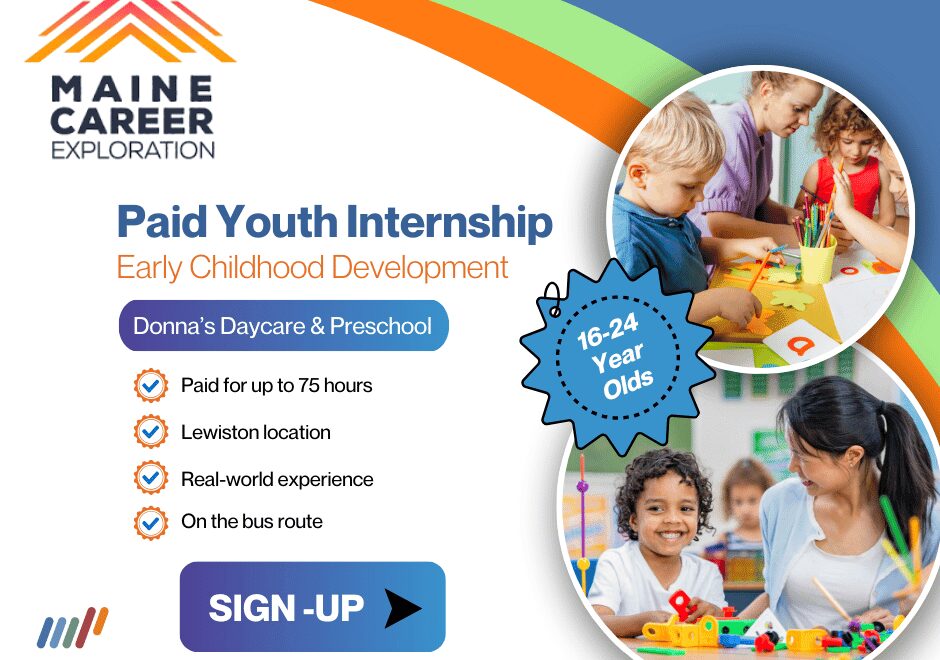
Are you age 16-24 and interested in exploring a career in early childhood education or childcare? We have exciting opportunities available with Donna’s Daycare in Lewiston, Maine through the Maine Career Exploration Program.

This innovative program is part of the Maine Jobs and Recovery Plan. It offers age-appropriate paid work opportunities to youth ages 16-24 to support career exploration that lines up with areas of interest.

What Paid Interns Receive:

  • Up to 75 hours of paid work experience at $14.65 per hour (Nearly $1100 pre-tax)
  • Opportunity to get real-world experience in a childcare setting
  • Chance to make community connections with leading area childcare providers
  • A fun and energetic work environment
  • Excellent resume builder for college applications or future work experience

What You Will Be Doing:

  • Job-shadowing with a dedicated team of childcare professionals
  • Working with children ages 0-12, learning how childcare processes differ between age groups
  • Supporting child development through engaging activities
  • Keeping an eye on behaviors and addressing them with guidance of classroom teachers

Schedules Available:

  • After school options between the hours of 2-5:30p for 16-18 year olds
  • Full & partial-day options for 18+ and during school breaks

Interested in exploring a career in early childhood development or childcare? Simply express your interest by filling out this quick contact form and we will be in touch.

Uncategorised

Maine Career Exploration Student Feedback

As a past participant in the Maine Career Exploration Program, your insights and experiences are incredibly valuable to us.

Can you please take a moment to complete this 2 minute survey and share your feedback with us? Click Here for Survey.

Thank you for you participation in the program and we wish you all the success possible in the future. Should you ever be in need of traditional employment support, Manpower is here to help!

If you know someone who might be interested in work experience through this program please send them this link:
https://www.manpowermaine.com/2025/04/15/mcep-youth-interest-form/

Uncategorized

MCEP Youth Interest Form

Uncategorized

Maine Career Exploration – Youth Interest

Are you between the ages of 16-24 and interested in exploring career options in your community? Simply fill out this form and we will work to connect you with approved opportunities in your area as they become available.